


Step behind the scenes and discover the professional techniques, insider tips, and expert knowledge I use with my clients everyday. From advanced acne solutions to custom skincare formulations, spray tan perfection, hair removal best practices, and wellness rituals like sauna therapy, you'll get the same expert guidance my clients pay for.
The Professional Skincare Secrets I Share With My Clients
Inside my Treatment Room:
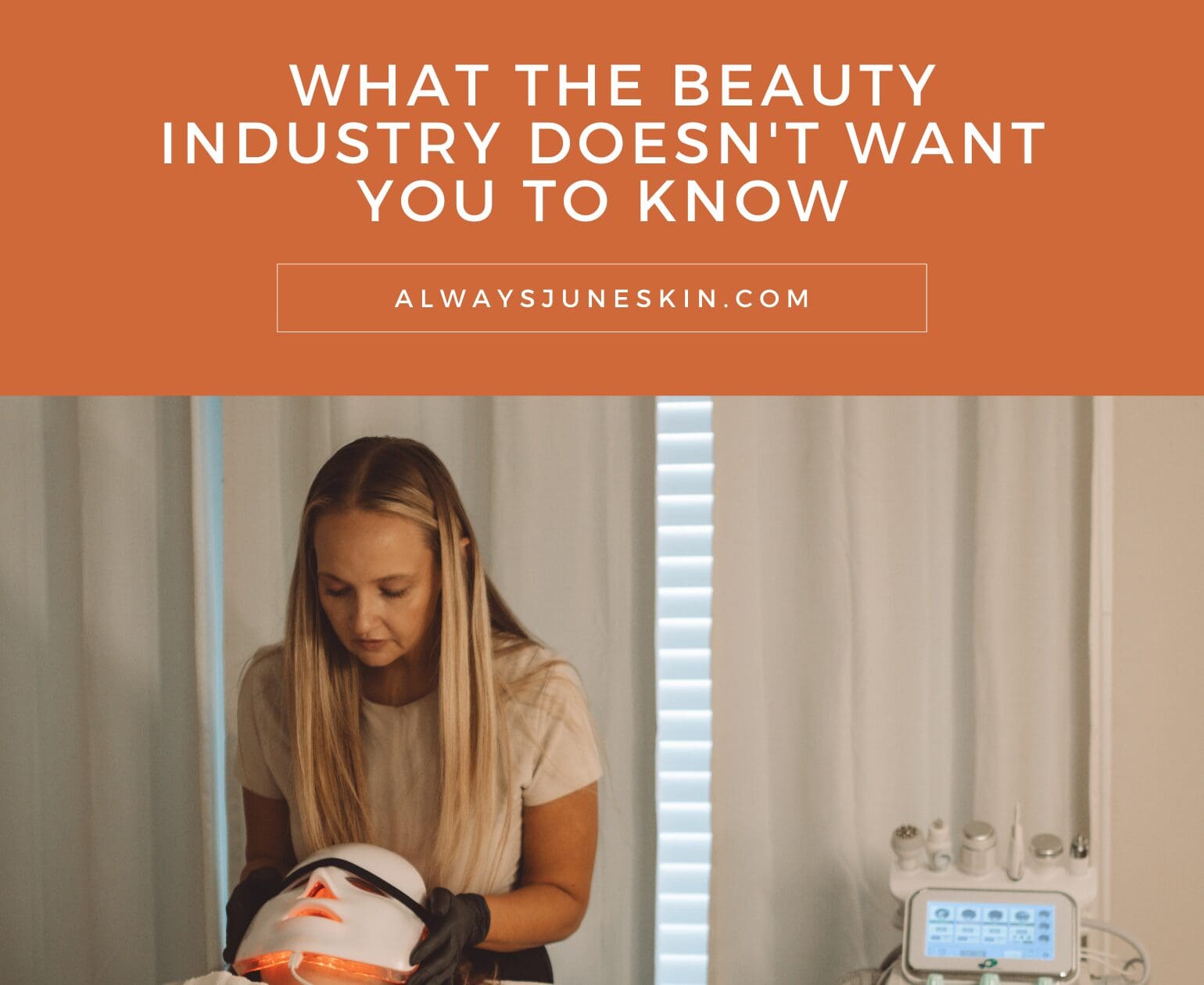
What the Beauty Industry Doesn’t Want You to Know
The skincare industry is worth over $180 billion globally, and while innovation drives some genuine breakthroughs, not everything that glitters is gold. Let’s cut through the marketing hype and reveal which trends are truly overrated. Plus the secrets brands would rather keep hidden from YOU!
The Most Overrated Skincare Trends Right Now
1. 10-Step Routines & Excessive Layering – It’s giving oversonsumption and capitalism.
The Korean skincare-inspired multi-step routine became a phenomenon, but here’s the truth: more isn’t always better. Layering 10+ products can actually overwhelm your skin barrier, cause irritation, and lead to product pilling. Your skin has a limited absorption capacity, meaning much of what you’re applying just sits on the surface.
The Reality: A simple, consistent routine with 5 or so quality products tailored to your skin type often delivers better results than an elaborate 10-step ritual.
2. “Clean Beauty” Marketing – It’s giving Fear tactic sales
The term “clean beauty” has no legal or FDA definition. Brands slap this label on products to imply they’re safer or more natural, but it’s largely a marketing tactic that preys on consumer fears about synthetic ingredients.
The Reality: Many synthetic ingredients are safer and more effective than their “natural” counterparts. Poison ivy is natural; that doesn’t make it good for your skin. Focus on proven ingredients rather than vague marketing terms.
3. Jade Rollers & Gua Sha Tools – Is it really the “It” girl thing anymore?
While facial massage has benefits for lymphatic drainage and relaxation, the material of your tool (jade, rose quartz, stainless steel) makes virtually no difference. The crystal healing properties brands tout have no scientific backing.
The Reality: A $5 stainless steel roller works just as well as a $60 jade one. You’re paying for aesthetics, not efficacy.
4. Expensive Eye Creams – Seriously, trust me!
Most eye creams are simply face moisturizers in smaller, pricier packages with lighter textures. Unless you need a specific active ingredient formulated for the delicate eye area, you’re paying premium prices for repackaged products.
The Reality: A gentle face moisturizer or serum often works perfectly for the eye area at a fraction of the cost.
6. “Detox” & “Purifying” Products – Fear tactic once again!
Your skin doesn’t need to “detox”—that’s what your liver and kidneys do. Products claiming to extract toxins or purify your skin are using pseudoscientific language to sell you clay masks and exfoliants you could buy without the marketing markup.
The Reality: Your skin naturally sheds dead cells and regulates itself. What it needs is support through proper cleansing, hydration, and protection, not detoxification.
Inside Industry Secrets They Don’t Want You to Know!!
Secret #1: Expensive ≠ Effective
Luxury brands often charge astronomical prices for prestige packaging and marketing, not superior formulations. Many affordable products contain the same active ingredients at similar concentrations as their luxury counterparts.
What to Do: Listen to how you are being “sold” these products. Are you feeling sold to, is the price outrageous, or are they talking to you about real ingredients that garner real results?
Secret #2: “Dermatologist-Tested” Means Almost Nothing
This claim simply means a dermatologist looked at the product at some point, maybe just one dermatologist, maybe they only tested it on five people, maybe for just a few days. There’s no standardization or regulatory requirement behind this label.
What to Do: Look for “clinically tested” with published studies or seek actual skincare therapists recommendations based on your specific concerns.
Secret #3: Private Label Products Are Everywhere!!
Many brands, from high budget to mid-range, don’t actually manufacture their own products. They buy pre-made formulations from private label manufacturers and simply add their branding. This means vastly different brands may be selling nearly identical products at wildly different price points.
What to Do: First and foremost, “Google” that brand, ask the practitioner about why they chose this product and for what benefits to your skin.
Secret #4: “Fragrance-Free” Isn’t Always Fragrance-Free
Brands can use masking fragrances to cover up chemical smells and still claim “fragrance-free” if the fragrance isn’t the product’s primary purpose. Commonly essential oils are added for fragrance or fragrance cover up. Keep in mind essential oils are highly concentrated and can be irritating.
What to Do: If you’re sensitive, look for products labeled “unscented” instead, or check for ingredients like “parfum” essential oils or specific fragrance compounds on the label.
Secret #5: Results Take Time—Instant Changes Are Temporary. And Quick “overnight” results are a LIE.
The industry thrives on before-and-after photos showing immediate transformations. Most of these capture temporary effects: hydration plumping, lighting differences, or filtering. Real skin changes from actives like retinol, vitamin C, or acids take 8-12 weeks minimum.
What to Do: Set realistic expectations. Give products at least 6-8 weeks before judging effectiveness, and be skeptical of claims promising overnight transformations.
Secret #6: Sunscreen Is Your Best Anti-Aging Product
The beauty industry would rather sell you expensive serums and treatments, but dermatologists agree: daily broad-spectrum SPF 30+ is the single most effective anti-aging product you can use. UV damage causes up to 80% of visible facial aging.
What to Do: Invest in a good daily sunscreen and wear it religiously. It’s more powerful than any $200 anti-aging cream.
Secret #7: Product Sizes Are Designed to Run Out Quickly! – Yep! Ever Wonder why you’re serums or moisturizers are in such smaller bottles than, say your face wash or toner?
Notice how your favorite product seems to empty faster than expected? Package designs, pump mechanisms, and recommended usage amounts are often engineered to increase repurchase frequency, not to deliver the most economical use.
What to Do: Start with smaller sizes to test products, and don’t feel pressured to use more than necessary. A pea-sized amount is often sufficient despite packaging suggestions. If your products are in soft tubes, cut it open as you are nearing the end and you’ll get plenty product more from the edges and corners by using a small makeup spatula.
Secret #8: Pump Bottles Dispense Way More Than You Need
Pumps are designed to dispense 2-3 times more product than necessary in a single press. This creates a perception of luxury and effectiveness while ensuring you repurchase more frequently. That’s why brands love pumps—they’re beautiful, hygienic, and profit-maximizing.
What to Do: Try using half a pump, or decant products into dropper bottles for better portion control. You’ll be shocked how much longer products last.
Secret #9: “New & Improved” Usually Means Nothing Changed
When brands relaunch products with “new formula” or “improved” claims, it’s often just a marketing refresh with minimal actual changes—sometimes just a different fragrance or packaging. This creates buzz and justifies keeping prices high while making your current product feel obsolete.
What to Do: Be Aware! There truly is not a lot you can do to guard against this other than be all knowing and not fall for the marketing. Do not think you must discard your current product for this fake “Upgraded” version.
Secret #10: Expiration Dates Are Conservative to Encourage Replacement
That 6-month or 12-month PAO (Period After Opening) symbol? It’s often extremely conservative. Most products remain stable and effective far longer if stored properly (away from heat and direct sunlight), but shorter expiration dates encourage you to toss and repurchase.
What to Do: Use your senses. If a product hasn’t changed in smell, texture, or color, it’s likely still fine. The exception: sunscreen and products with active ingredients like vitamin C or retinol, where potency actually degrades.
Secret #11: Sample Sizes Often Have Better Formulations – This is a big one!!
Here’s a dirty secret: deluxe samples and trial sizes sometimes contain slightly different (better) formulations than full-size products to hook you during the trial period. They may have more active ingredients, better textures, or more elegant formulations.
What to Do: If you love a sample but the full-size disappoints, you’re not imagining it. Check reviews to see if others noticed the same discrepancy before repurchasing.
Secret #12: “Clinically Proven” Claims Can Be Manipulated
Brands can run their own “clinical studies” with tiny sample sizes, under ideal conditions, with hand-picked participants, and cherry-pick the most favorable results. “92% of users saw improvement” might mean 12 out of 13 people in a study funded and controlled by the brand itself.
What to Do: Look for independent, peer-reviewed studies published in dermatology journals. If the study isn’t published or the sample size isn’t mentioned, be skeptical. – If this feels too overwhelming and you would prefer to not sift through the data and jargon, trust your skincare expert and book a consult.
Secret #13: Jar Packaging Degrades Your Product Faster
Open jars expose products to air, light, and bacteria every time you use them, especially if you’re dipping fingers in. This degrades active ingredients faster and increases contamination risk. But jars are cheaper to manufacture and look luxurious on vanities, so brands continue using them.
What to Do: Prefer airless pumps, tubes, or opaque bottles, especially for products with active ingredients. If you must use a jar, consider using a clean spatula instead of fingers. Look for glass amber bottles, airtight canisters, or single use items like capsule skincare or one time use facial peels.
Secret #14: “Cruelty-Free” Doesn’t Mean What You Think
A product can be labeled cruelty-free even if its individual ingredients were tested on animals, as long as the final product wasn’t. Also, brands can be cruelty-free in some markets but test on animals where required by law (like China), yet still use the label in other countries.
What to Do: Look for Leaping Bunny certification (the most stringent standard) rather than just brand claims.
The Bottom Line
The skincare industry thrives on creating desire, urgency, and FOMO. While there are genuinely effective products and helpful innovations, learning to separate science from marketing is your best tool as a consumer.
Focus on these proven essentials:
– A gentle cleanser
– A good moisturizer suited to your skin type
– Broad-spectrum sunscreen (SPF 30+)
– One or two targeted treatments with proven actives (like retinol, vitamin C, niacinamide, or acids)
Everything else is optional. Build your routine based on your actual skin needs, not influencer recommendations or viral trends. Your skin and your wallet will thank you.
Remember: The best skincare routine is the one you’ll actually stick to consistently. Simple, effective, and sustainable beats complicated and expensive every time.*
PS – Don’t want to sift through all of the above information on your own? Thats OK, Always June Skin Studio will do it for you! Book a Consult and that will determine your skin type, how you can alternatively use your current products if they aren’t appropriate for your face and skin type, and leave the appointment with clarity on your skin journey forward!
Health
Lifestyle
Treatments
skincare
Search the Blog
© always june skin studio. ALL RIGHTS RESERVED 2025. website Design by Sheena and co digital solutions.
We simplify your beauty rituals and help you feel radiant — inside and out.


